




KlaesLab - Neurotechnology at Ruhr-University Bochum

Welcome to
KlaesLab

Led by Professor Christian Klaes, the KlaesLab specializes in exploring the intersection between biological and artificial systems. Professor Klaes holds the professorship for neurotechnology at the Ruhr-University Bochum and is an expert in human and monkey brain-computer interfaces, both invasive and non-invasive. Currently, the lab is focused on using state-of-the-art machine learning approaches for brain-machine interfaces to control devices, developing advanced neural analysis methods to control human hand exoskeletons, and conducting virtual reality research using VR, EEG, and invasive neural recordings from humans.

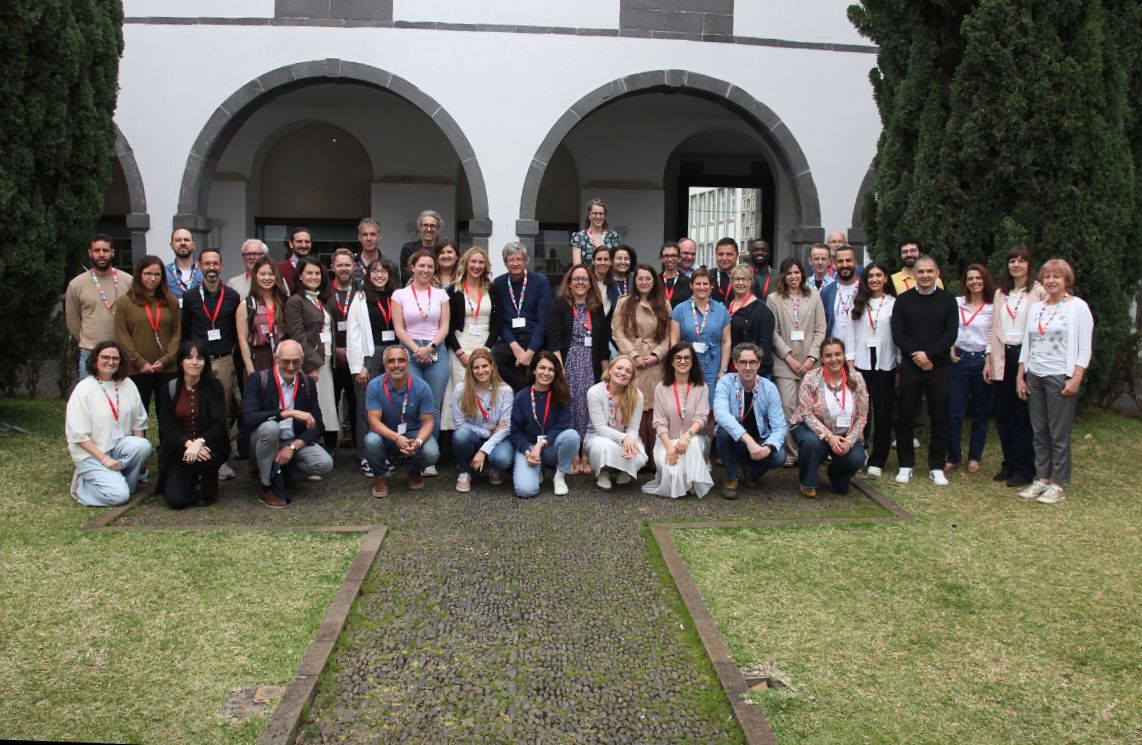
The lab has a broad network of collaborations within Ruhr-University Bochum, as well as with external partners such as Caltech, Ruhr University of Applied Sciences (Iossifidis Lab), German Primate Center, University of Madeira, Snap Gmbh, and many others.

Invasive BCI
Non-Invasive BCI
Virtual Reality
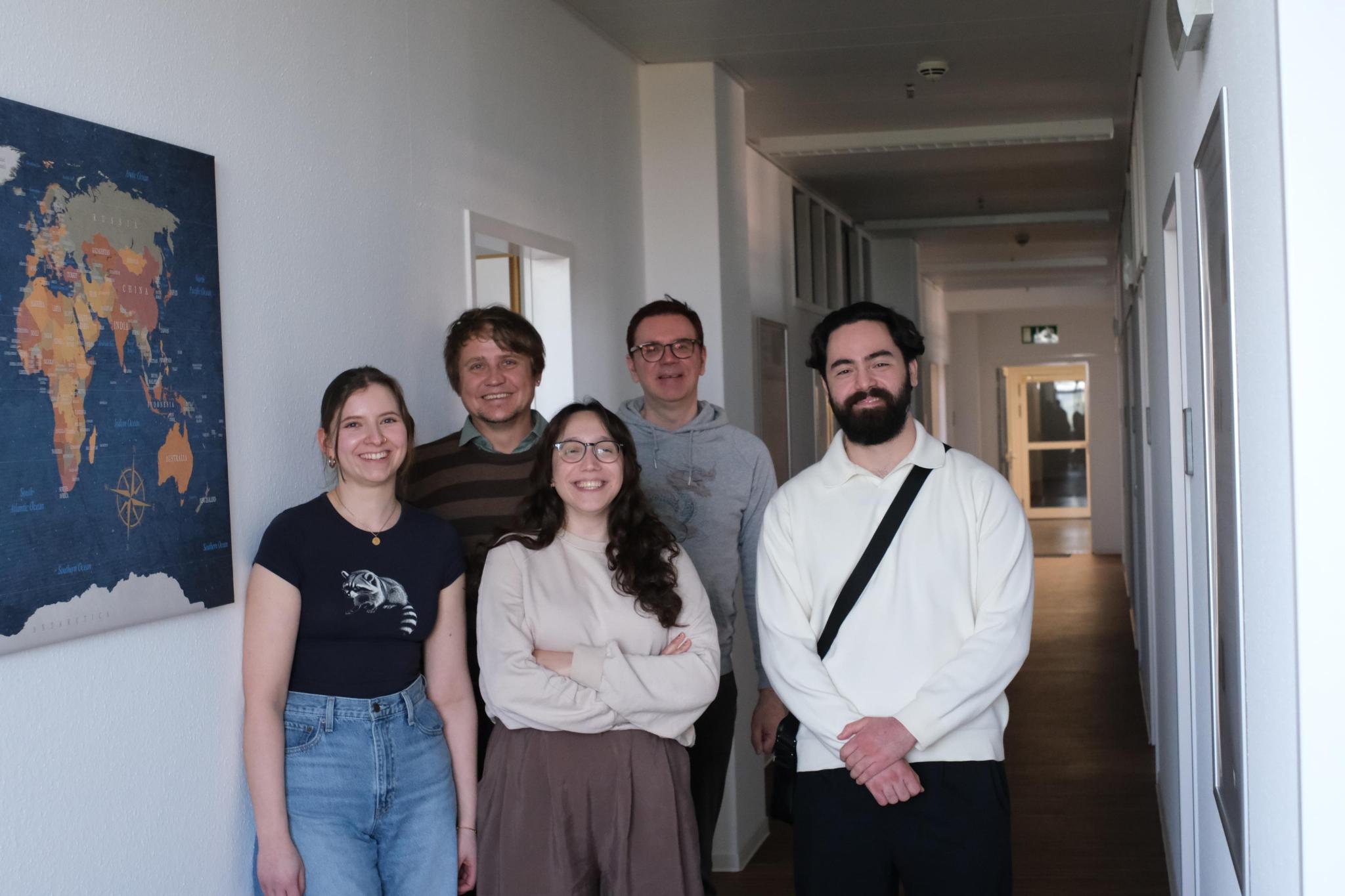
KlaesLab Team

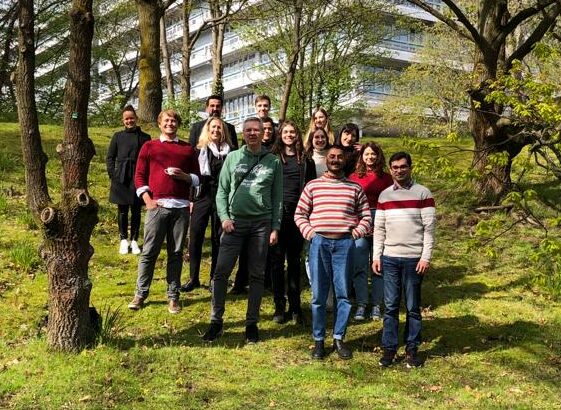
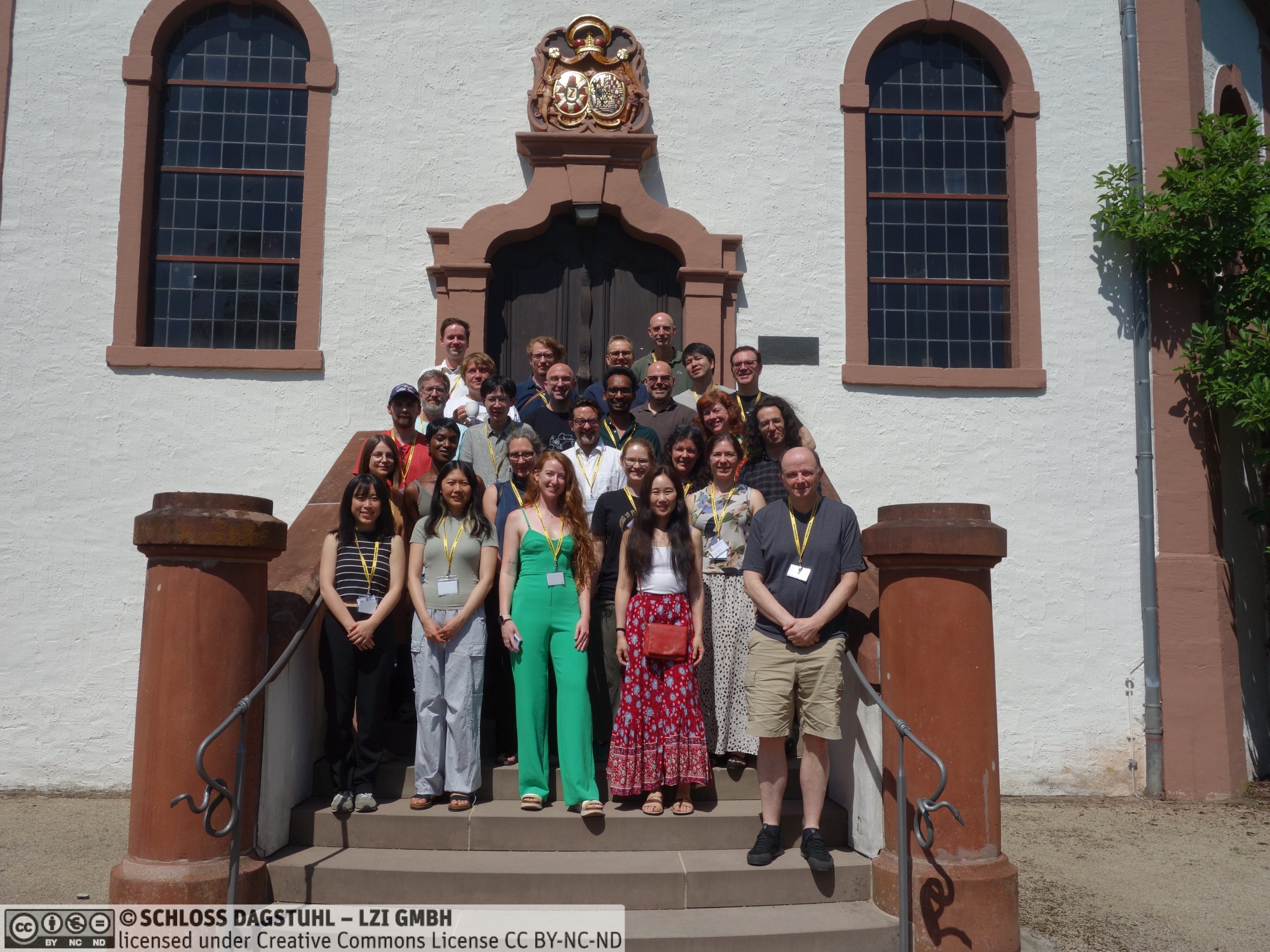
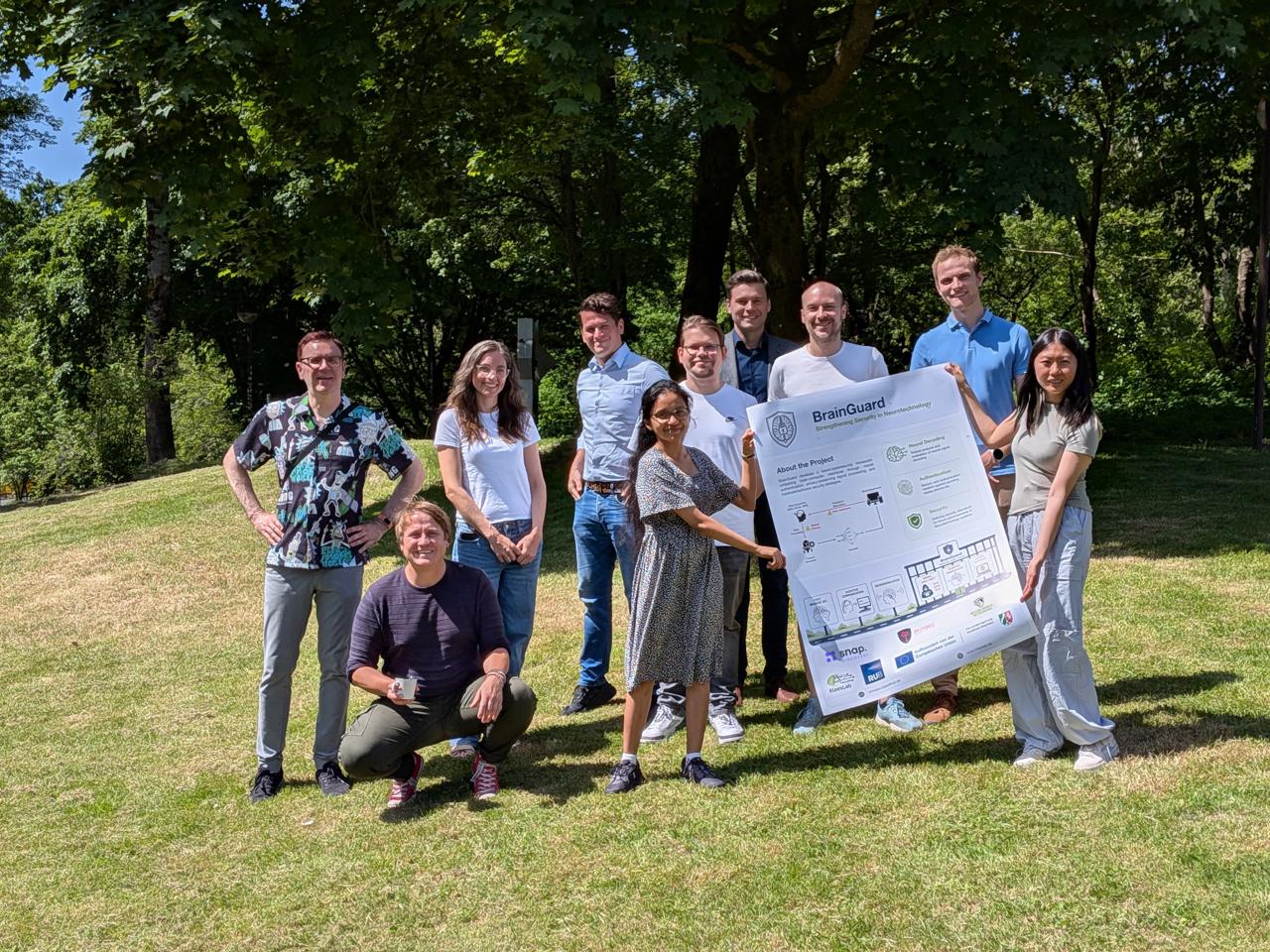
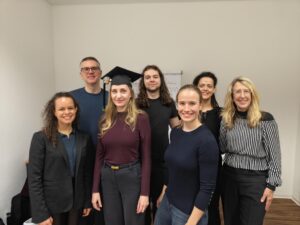
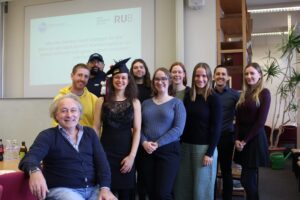
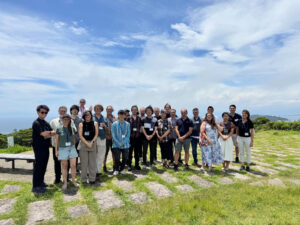
The KlaesLab Team

Ruhr-University Bochum

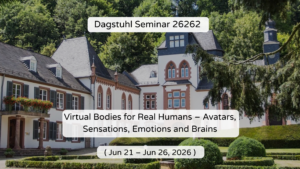
News and Events

KlaesLab - Key Research Areas

Our Focus

Key Research Areas

Derzeit konzentrieren wir uns auf den Einsatz virtueller Realität bei der Simulation menschlicher Interaktionen mit den Gehirn-Maschinen-Schnittstellen bei der Steuerung von Geräten, kollaborativer Robotik, neuartige Methoden zur Bewertung der Gehirnaktivität und die Entwicklung fortschrittlicher neuronaler Analysemethoden für die Steuerung von Exoskeletten für die menschliche Hand.

MindMove System

MindMove: Automated Neurorehabilitation

Together with medica Medizintechnik GmbH, Ambulanticum GmbH, SNAP GmbH, and the RUB Chair for Production Systems, we are developing a novel, automated rehabilitation system for grasping therapy that combines modern neurotechnology with robotics. We utilize Brain-Computer Interfaces (BCIs) to detect movement intentions directly from brain activity and synchronize them with robot-assisted movement execution. Supported by machine learning and automated assessments, the project aims to create personalized, high-frequency training scenarios to improve independence for patients with neurological conditions.

Neurorehab BCI
BrainGuard Framework

BrainGuard: Neuro-Cybersecurity

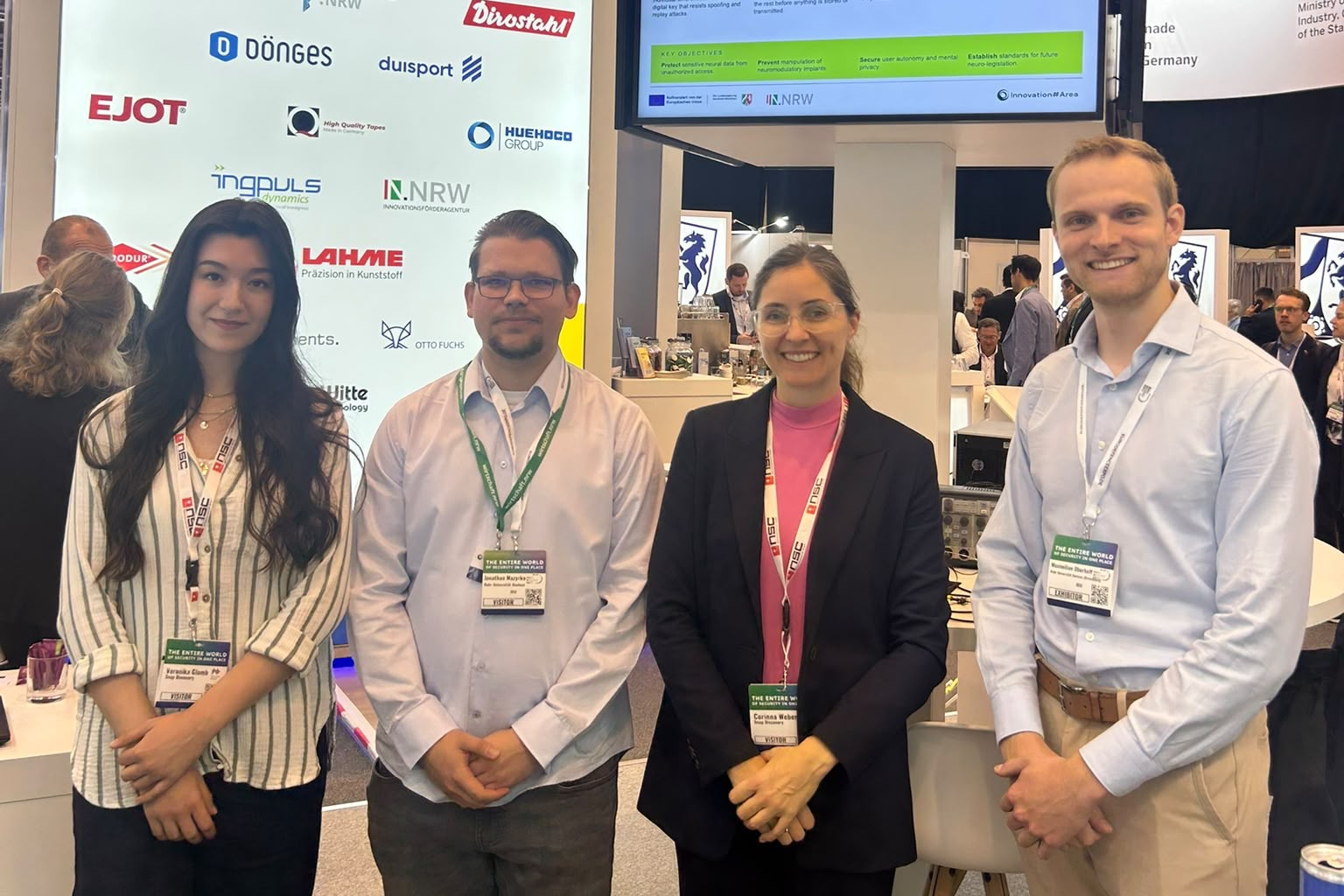
Together with the RUB Chair for Secure Mobile Networking, Physec GmbH, and SNAP Discovery AG, we are developing a systematic neuro-cybersecurity framework for Brain-Computer Interfaces (BCI) and neuromodulatory implants. We aim to create novel security concepts—ranging from neural identification to hardware protection—that safeguard sensitive neuronal data, prevent manipulation, and ensure user autonomy against emerging cyber threats.

Cybersecurity Implants
VR Diagnostics
View Image

Nutzung von VR zur Diagnostik von neurologischen Erkrankungen

Wir entwickeln einen standardisierten Test zur Diagnose von motorischen Funktionsstörungen in der VR. Wir nutzen moderne Machine Learning (ML) Algorithmen, wie z.B. Deep Learning, im Kontext der Diagnose und Therapie von neurologischen Erkrankungen mit Hand- und Armfunktionsstörungen.

VR Deep Learning
Neural Signal Processing
View Image

Neuronale Signalverarbeitung mit künstlicher Intelligenz auf einer eingebetteten Plattform

Ziel dieses Projekts ist die Entwicklung einer End-to-End-Pipeline für die neuronale Verarbeitung, die Online-Algorithmen für die Spike-Sortierung und neuronale Dekodierung unter Verwendung analoger und digitaler eingebetteter Hardware implementiert. Diese Pipeline ist ein grundlegender Baustein für die Entwicklung der nächsten Generation von neuronalen Implantaten. Das System stützt sich auf modernste Algorithmen des maschinellen Lernens, um Bewegungsabsichten aus der Gehirnaktivität zu dekodieren. Parallel dazu werden wir einen neuronalen Decoder optimieren, der auf Deep-Learning-Methoden basiert.

Embedded AI
Smart Exoskeleton
View Image

Smart upper-limb exoskeleton

We are interested in developing a key component –a bio-mechanically designed, adaptive exoskeleton for the upper extremity — to explore and enable patients with arm and grip function impairment due to various neurological diseases in their journey of rehabilitation. The exoskeleton is a holistic rehabilitation system that includes the design and implementation of movement tasks in VR, a feedback system based on biosignals and a generic decoder for invasive and non-invasive brain-computer interfaces.

Robotics Rehab
Collaborative Robotics
View Image

Collaborative robotics

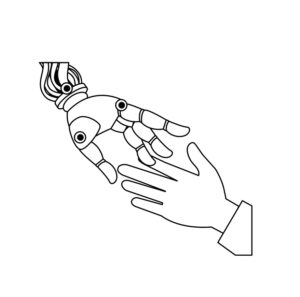
Together with Ruhr University for Applied Sciences, RUB Chair for Production Systems, and University of Madeira, we develop a framework for trustful and efficient motor collaboration between humans and robotic agents. We use human biomarkers as a proxy of human state in order to adaptively guide actions of the collaborative robot.

HRI Biomarkers
Terahertz Imaging

Terahertz

Wir setzen Terahertz-Strahlung ein, um neue Methoden zur Abbildung der Gehirnaktivität für zukünftige Gehirn-Maschine-Schnittstellen zu entdecken.

Imaging Future Tech
Phantom Touch Research
View Image

Phantom Touch

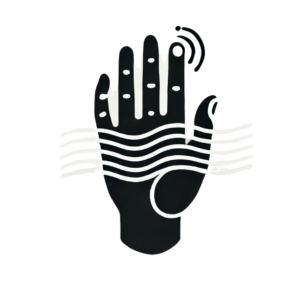
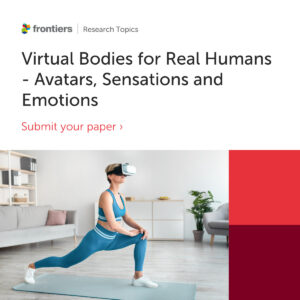
This line of research explores phantom touch illusion —the perception of touch without physical contact in virtual reality. This can be useful for neurorehabilitation and sensory augmentation. By integrating VR, brain-computer interfaces, and haptic technologies, we aim to enhance motor recovery, rewire neural pathways, and improve sensory experiences for patients with neurological disorders.

Sensory VR
If you are interested in our projects and/or working with us,

please reach out to us.


Abschicken